Muzyka 2026
Discover Ukraine through music
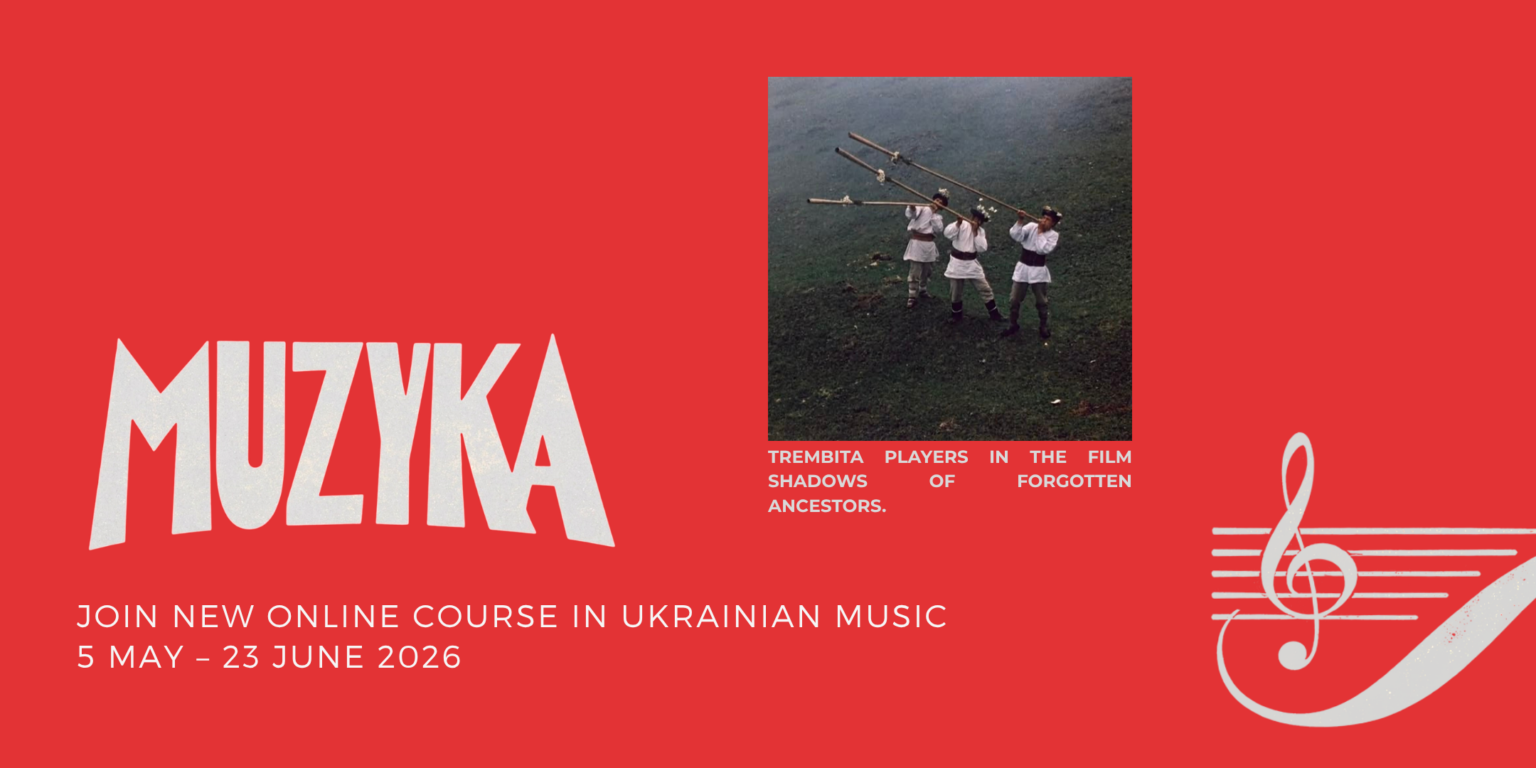
Ukrainians are a musical people, yet their creations remain largely on the periphery of general discussions of music. Despite this historic marginalisation, Ukrainian music is richly varied and diverse, drawing from ancient folk sources, experimenting with avant-garde technologies, resisting sonic imperialism, and engaging in dialogue with the best-known and most beloved works of music history. In this eight-week course, we will discover key genres, figures, and movements of Ukrainian music, from authentic folk singing to musical responses to war.
Our eight-week course on Ukrainian music will examine a wide range of repertoires across several centuries, performing styles, and contexts. The course will range from folk music traditions, such as authentic village singing and the history of Ukraine’s national instrument, the bandura, to the works of Kyiv Avant-Garde, musical dissidents coming of age in the 1960s.
The course will also engage with contemporary efforts to decolonise Ukrainian music through figures whose identities have been contested by Russia, such as Dmytro Bortniansky, and those whose music was forcefully suppressed by the soviet authorities as in the case of modernist composer Borys Liatoshynsky. The course will provide contemporary insights into how Ukrainian composers have responded to current political events, such as the 2014 Revolution of Dignity and the 2022 full-scale invasion of Ukraine, and how music has functioned as a diplomatic tool on global stages such as Eurovision.
The course will offer an exceptional opportunity to hear from leading scholars and performers of Ukrainian music. It will present a concise introduction to major figures of Ukrainian music history while positioning their contributions into an overarching narrative of music from the crossroads of empire, at the heart of Europe, and in the birthplace of various musical innovations. No prior musical knowledge of any kind is required, but this course will offer even the most experienced listener new repertoires to explore and a framework to better understand Ukraine through sound.
What you can expect:
- Comprehensive reading and listening materials
- Engaging presentations by scholars and musicians
- Access to recorded video lectures for flexible learning
No prior musical knowledge is required.
The course will be held online, via Zoom and conducted in English.
Course curator: Dr Leah Batstone, musicologist and creative director of the Ukrainian Contemporary Music Festival in New York City.
Course coordinator: Olga Sydorushkina, UIL Programme Curator.
Dates
8 weekly seminars: 5 May – 23 June 2026
Time: 18:30 – 20:00 (London time)
Course Fees
Full course:
£240 early bird (available until 20 April)
£260 general / £180 student — includes Certificate of Completion and full course materials
One seminar:
£35 general / £25 student — includes course materials and video recording of the seminar attended
Friends of the Institute (10% discount):
Full course:
£234 general / £162 student
One seminar: £31.50 general / £22.50 student
Benefactors of the Institute (20% discount):
Full course: £208 general / £144 student
One seminar: £28 general / £20 student
How to enrol
You can enrol by registering for the full course or individual seminars below.
Should you have any queries, please email us at [email protected]. We will aim to respond within five working days.
2026 course programme
Tuesday 5 May, 18:30 – 20:00 GMT
Week 1: The Folk Voice and the Bandura
Lecturer: Iryna Voloshyna
Bio: Folklore and Ethnomusicology scholar at Indiana University
Find out more and sign up here.
Tuesday 12 May, 18:30 – 20:00 GMT
Week 2: Ukrainian Art Songs: A Testament to Perseverance
Lecturer: Andrew Skitko
Bio: Andrew Skitko is a professional singer, voice teacher, and a member of The Ukrainian Art Song Project.
Find out more and sign up here.
Tuesday 19 May, 18:30 – 20:00 GMT
Week 3: Mykola Lysenko and the emergence of Ukrainian national music
Lecturer: Rutger Helmers
Bio: Rutger Helmers is assistant professor of musicology at the University of Amsterdam, specializing in questions of nationalism, cosmopolitanism and imperialism in the musical life of nineteenth-century Ukraine and the Russian Empire.
Find out more and sign up here.
Tuesday 26 May, 18:30 – 20:00 GMT
Week 4: The Ukrainian Baroque: the “Golden Trio” composers of choral music
Lecturer: Marika Kuzma
Bio: Marika Kuzma is a highly regarded conductor and scholar of international choral music who has published widely on Bortniansky, a critical edition and acclaimed recording of his choral concertos, and most recently a book on Ukrainian carols accompanied by a recording and performances of that repertoire in prestigious venues.
Find out more and sign up here.
Tuesday 2 June, 18:30 – 20:00 GMT
Week 5: Between Modernism, Ukrainisation, and Soviet Ideology: Borys Liatoshynsky’s 1920s Case
Lecturer: Iryna Tukova
Bio: Associated Professor at the National Music Academy of Ukraine, co-founder Liatoshynsky Foundation NGO
Find out more and sign up here
Tuesday 9 June, 18:30 – 20:00 GMT
Week 6: Mid-Century Nonconformists
Lecturer: Peter Schmelz
Bio: Peter J. Schmelz, Professor and Chair of the Department of Comparative Thought and Literature at Johns Hopkins University (Batimore, USA), specializes in twentieth and twenty-first century musics, including Ukrainian music, and particularly the life and work of Valentyn Sylvestrov.
Find out more and sign up here.
Tuesday 18 June, 18:30 – 20:00 GMT
Week 7: Broadcasting to the West: Ukraine and Cultural Diplomacy at the Eurovision Song Contest
Lecturer: Olga Zaitseva-Herz
Bio: Olga Zaitseva-Herz is an ethnomusicologist whose work explores Ukrainian music in relation to identity, displacement, and historical upheaval, with particular attention to the role of songs in communication, political mediation, and digital culture, including AI-generated music.
Find out more and sign up here.
Tuesday 23 June, 18:30 – 20:00 GMT
Week 8: Music after the Revolution of Dignity
Lecturer: Oksana Nesterenko
Bio: Oksana Nesterenko is a musicologist specializing in late 20 th – and 21st-century music, with a focus on Eastern Europe and postcolonial studies.
Find out more and sign up here.